

The situation
They started from nothing. No CRM, no pipeline, the whole company run off Google Sheets. Leads came in by SMS service, by web form and by word of mouth, and every one of them landed on the owner’s own phone for him to hand on to a rep himself.
Calls that came in while three crews were up in canopies rang out to nobody. The ones he caught turned into a text asking for photos, and roughly half those homeowners never sent them, so the job died quietly in a thread.
What we built
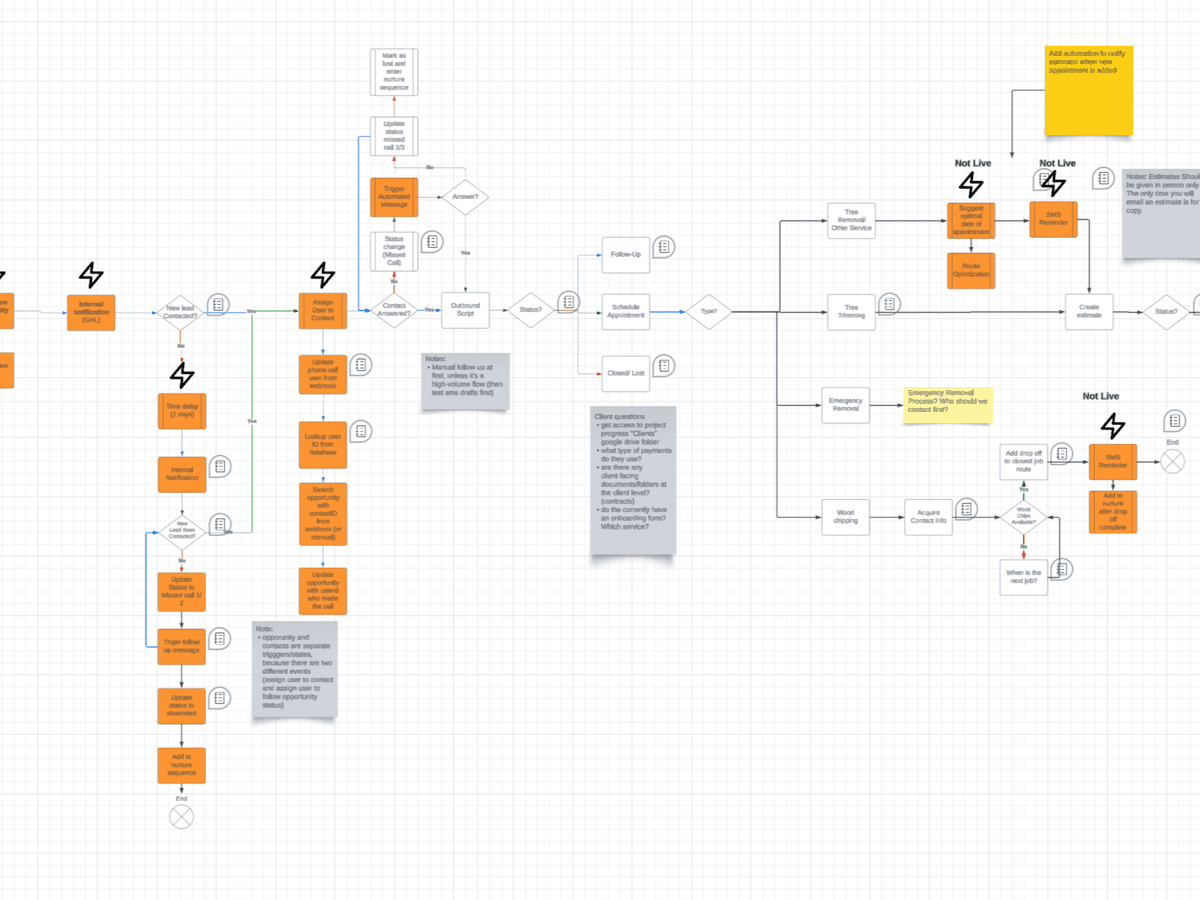
- A dedicated business number with custom IVR routing, so a caller reaches the rep who owns that lead instead of reaching the owner and waiting to be passed along. He is out of the middle of lead flow entirely.
- Every inbound call transcribed the moment it ends, with a wrong number or an IVR hang-up ruled out first. A genuine missed call gets a follow-up in about a minute, while the homeowner is still holding her phone.
- The call recorded, transcribed and summarised, the follow-up tasks created, and the opportunity moved to the stage the conversation justified, all inside 56 seconds of hanging up. Reps talk to customers; nobody types up what they just said.
- Photo requests that chase themselves and stop the moment the pictures land, at which point the estimator gets a task to price the job. Nothing sits waiting in a text thread for somebody to remember it.
- A homeowner who agrees to a walk-through booked straight onto the right estimator’s calendar, with the day suggested against where her address sits. Estimates cluster into one part of town instead of scattering a rep across the county, so he fits more of them into the same day.
- A real pipeline in place of the spreadsheet, every opportunity sitting in a stage, so a job that has gone quiet surfaces on its own rather than being remembered by accident three weeks later.
- Every lead carrying its true source through to booked work, and every rep holding defined responsibilities with their own tasks arriving in front of them. That is what let the owner stop managing the day and start working on the company.
The results
- from first call to fully live
- 6 wks
- from hanging up to notes, tasks and pipeline updated
- 56 sec
- from a missed call to the first follow-up going out
- 63 sec
- a week the owner stopped spending on hand-forwarding leads
- 24 h/wk
What changed, in their numbers
| Measure | From | To |
|---|---|---|
| Leads handled per month | 150 before Castalin | 195 in month one, 225 in month two |
| Outreach attempts per lead | 5.6 in June and July 2026 | 3.9 in August 2026 |
| Median time to first contact, on leads someone had to chase | 24.7 hours in June, 27.4 in July 2026 | 4.7 minutes in August 2026 |
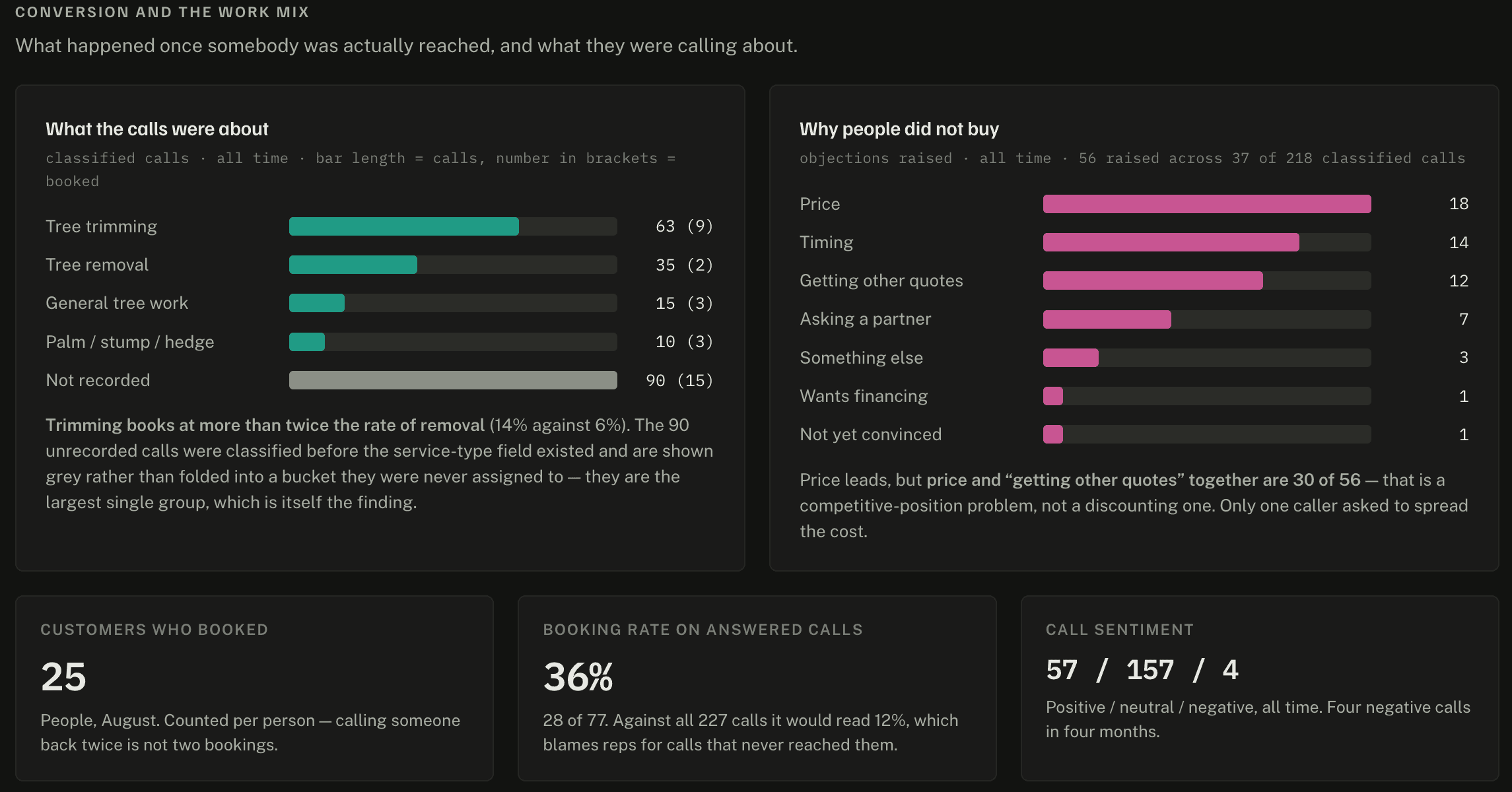
Month two was their best month. Leads handled is a count of leads, not of jobs completed. Time to first contact is the median for each full month, across leads that did not arrive connected and got at least one outbound attempt; it is a separate measure from the 63 seconds to the automatic missed-call follow-up. In August 2026, 25 customers booked, each counted once however many calls it took.
The build took six weeks. At the end of it the owner had stopped being the switchboard his own company ran through, and had about 24 hours of his own week back.
What an engagement actually produces.
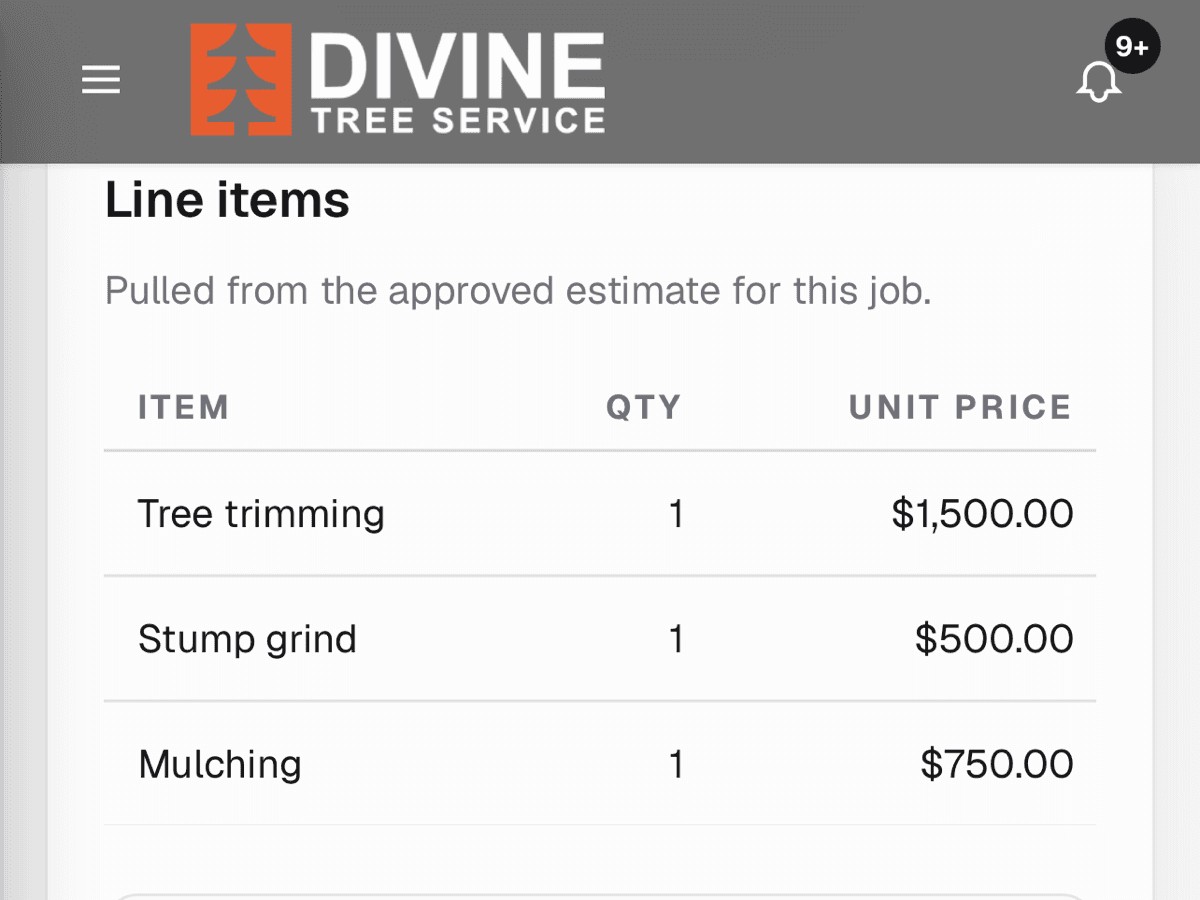
Three artefacts come out of this work, in this order. These are Divine Tree Service’s own, which is why this page can show them.
What the system did not fix
Across 218 classified calls, 37 carried an objection, 56 objections in all. Price came up 18 times and getting other quotes 12. A faster callback answers neither of those. They are questions about where the company stands against the competition, and they stayed with the owner.